I Asked Real Humans About AI Shopping. They Asked Me If I Was Okay.
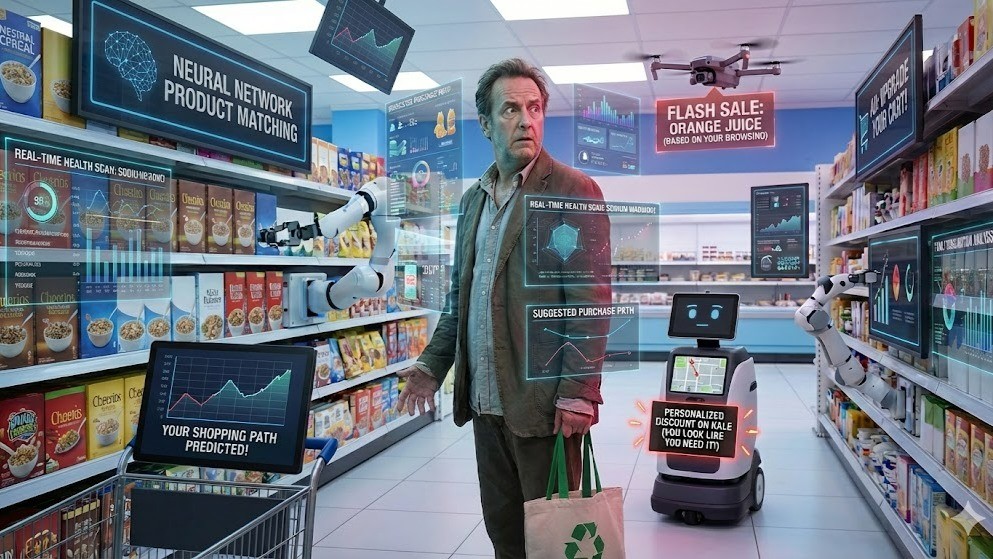
I Love This Future. I Just Don’t Want Us to Forget People.
I have to start with this: I freaking love technology. I’m a big believer in agentic commerce, and I genuinely can’t wait for it to live up to its full potential. But here’s the thing. I also think we (especially those of us who are true believers) can lose touch with the real world faster than we realize. The real consumer. The real day-to-day shopping chaos. The stuff that doesn’t show up in our decks or demos. So I’m writing this because I believe in where this is going, not because I’m skeptical, consider it a friendly little wake-up call to myself (and maybe to anyone else living in the bubble with me).
The Experiment
For the past three months, I’ve been running a little personal experiment: I carved out at least two hours a day, on purpose, to get out of the bubble and talk to people who don’t live and breathe technology. Not in a “user research” way. Just real conversations with friends, family, neighbors, and random people I’d end up chatting with at the store or in line for coffee.
I’d ask simple questions like, “Would you ever let an AI shop for you?” and the reaction was almost always the same: a pause, a half-smile, and then some version of, “Are you okay?”
And honestly…FAIR!
Because the more I listened, the more I realized how different our shiny “future of commerce” conversations sound compared to how shopping actually feels to a real person on a random Tuesday.
Inside the Bubble vs. Outside the Bubble.
In our world, we get excited about what’s possible. We talk about AI, identity, personalization, seamless experiences, agent-based journeys, and automation across the lifecycle. We map flows. We imagine a future where your assistant understands you better than you understand yourself and handles the annoying stuff in the background.
But when you talk to people outside the bubble, you don’t hear “Wow, that sounds efficient.”
You hear things like: “What if it orders the wrong thing?” “What if I can’t return it?” “What if it chooses something cheap and weird?” “What if it locks me into a subscription?” “What if it starts buying stuff and I don’t notice?” “What if it knows too much about me?” “Who do I talk to when it messes up?”
It’s not that people are anti-technology. A lot of people are just… tired. They’ve been trained by years of pop-ups, fine print, surprise charges, and experiences that feel designed to win against them instead of help them. They’ve learned, sometimes the hard way, that “convenient” often comes with a hidden cost: less control.
The Line that Actually Matters
And that’s when it clicked for me: there’s a big difference between AI helping you shop and AI shopping for you.
Most people I spoke to were open to help. They loved the idea of cutting through noise. They liked the idea of not opening seventeen tabs and comparing the same three products until midnight. They liked the idea of something that remembers preferences and constraints: budget boundaries, delivery needs, brand preferences, “I hate complicated setup,” “I need this by Friday,” “I don’t want to deal with returns.”
People want relief. They want less mental load.
But the moment the conversation crossed from “help me decide” into “go ahead and do it,” you could feel the brakes. That line, between assistance and delegation, is where adoption will be won or lost.
And that line is emotional, not technical.
Identity Feels Different Out Here
In tech, we often describe identity as a way to make things smoother: sign in once, faster checkout, better personalization, and more relevance. Outside tech, identity is often experienced as something else entirely: tracking, exposure, risk, losing the ability to explore privately.
A few people said versions of the same thing without even realizing how consistent it was: “I want the convenience, but I don’t want to hand over my whole life.”
They want to browse without feeling watched. They want to explore without feeling profiled. They want to keep their options open without being nudged, pressured, or boxed in.
They want to share what’s necessary, when it’s necessary, and not a second earlier.
The Part Nobody Puts in Diagrams
And there’s another piece that doesn’t show up on architecture diagrams: people don’t just want protection from fraud. They want protection from embarrassment.
They don’t want an assistant buying something that makes them feel stupid. They don’t want to explain a weird charge. They don’t want to spend their Saturday untangling a mistake that started with “the system decided.” They don’t want to feel helpless inside a flow they don’t understand.
So I started thinking about shopping less like a funnel and more like a string of very human moments.
There’s the moment you realize you need something. The moment you’re trying to figure out what the “right” version is. The moment you’re hovering over the purchase button, wondering if you’re missing something. The moment after you buy, when you just want reassurance that it’s on its way. The moment it arrives, when reality either matches expectations or doesn’t. And then the moment you decide whether you’d ever do that again with the same brand.
When people talk about trust, this is what they mean. Not brand campaigns. Not slogans. Not product launches. They mean: did it arrive on time, did it match what I thought I was buying, and did someone help me when it didn’t?
The Future Won’t Land Evenly
It also made me notice something else: the “future of commerce” isn’t going to land evenly across all categories.
Some purchases are low-risk. Reordering household basics. Buying something you’ve bought before. Replacing a known item in a known size. In those cases, people are far more willing to let automation handle things. It feels like relief.
Other purchases are personal, expensive, or error-intolerant. Things with fit. Taste. Compatibility. Things that become a hassle to return. Things that feel like identity. In those categories, people don’t want speed. They want confidence. They don’t want “one click.” They want “I won’t regret this.”
You can build the most advanced system in the world, but if it increases the fear of regret, it won’t become a habit.
Capability isn’t Adoption
And here’s the big lesson I keep coming back to, the one I’m trying to burn into my own brain:
Just because something exists doesn’t mean it will be adopted.
Adoption is emotional. Adoption is social. Adoption is cultural. Adoption is when a new behavior becomes easy to digest as normal.
It’s when someone tries it once, and nothing bad happens. It’s when a friend says, “I did it, it worked, it was fine.” It’s when the system feels like it’s on your side. It’s when you feel in control, and you can undo things easily.
The Real Question
So when we talk about AI shaping commerce, I think the real question isn’t “what will agents be capable of?”
It’s “what will people comfortably delegate without feeling exposed, manipulated, or trapped?”
The path to that future probably looks less like a sudden leap and more like a gradual handoff. People are happy to let AI reduce overwhelm. Summarize. Compare. Narrow options. Surface trade-offs. Catch mistakes. Remember preferences. Protect them from bad deals.
Then, slowly, they’ll accept AI preparing actions, building carts, drafting purchases, suggesting timing, warning about return policies, and explaining what happens if something goes wrong.
And only after trust is earned, really earned, will they let it act more autonomously. Not because they’re irrational. Because they’re experienced.
The Responsibility
And that’s where I landed after three months of these conversations.
Not on a hotter take. Not on a new framework. Just on something painfully basic.
If we’re building the next era of commerce with AI and identity, then we don’t get to build it only for people like us, the ones who have time to learn new flows, who enjoy tinkering, who can tell the difference between a feature and a bug, who know where the settings live. We’re building it for everyone. For the people who are tired after work. For the people juggling kids and errands. For the people who don’t want another account, another password, another “just verify this one more thing,” another system that makes them feel dumb for not understanding it.
And I think that makes the responsibility pretty clear.
Our job isn’t to make commerce more futuristic. It’s to make life a little easier. A little calmer. A little more predictable. To reduce the moments where people feel tricked, stuck, or overwhelmed. To build experiences that earn trust the boring way, by working, by being fair, by being easy to undo, and by treating people like humans instead of “conversion opportunities.”
We can get excited about what’s possible, and we should. But we can’t confuse possibility with progress. Progress is when regular people adopt something without thinking about it. When it feels normal. When it quietly helps, instead of loudly demanding attention.
So I’m trying to hold myself to this: go outside the bubble more often, keep having these conversations, and bring that reality back into the room, because “the future” doesn’t belong to the best diagram. It belongs to the people who have to live with what we ship.
If we keep that straight, if we keep the customer first, keep the basics sacred, and keep the goal simple, we’ll build something worth trusting.
Not more complex. Just better.
Subscribe to Field Notes
Get my latest essays on Enterprise AI and Agentic Commerce delivered straight to your inbox.