The Library 📚
I believe you are what you read. This is a curated list of the books, mental models, and frameworks that have fundamentally shaped how I think about technology, business, and life.
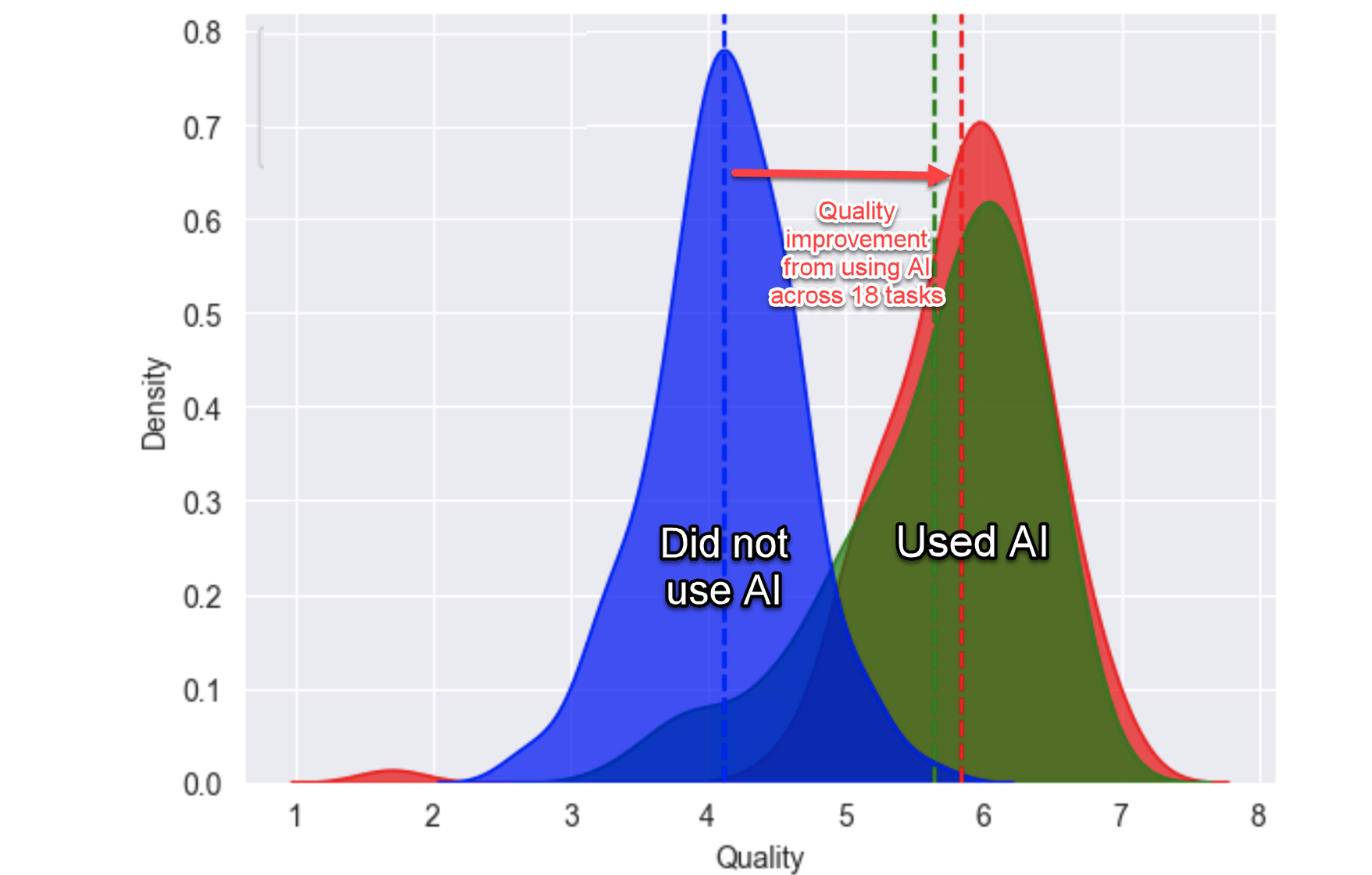
Centaurs and Cyborgs on the Jagged Frontier
By Ethan Mollick - One Useful Thing
An AI system can produce something impressive and then struggle with a task that appears much simpler. Ethan Mollick gives that unevenness a memorable explanation: the “jagged frontier” of AI capability. Drawing on a study of consultants using AI, this article explores why understanding the task matters so much when deciding how to use the technology.
I recommend it because it encourages a more thoughtful approach to delegation. In product work, we might use AI to explore alternative explanations for customer feedback, while still checking those interpretations against the original evidence. We can also work more interactively, revising and questioning an answer as it develops. The article offers useful language for thinking about those different forms of collaboration.
Published in 2023, it describes a particular generation of tools and research. Its lasting value is the question it leaves us with: where does AI help in this specific workflow, and how will we recognize when it does not? That is a practical starting point for experimentation. A successful demonstration can open a possibility; careful evaluation helps us decide what responsibility the system should actually receive.
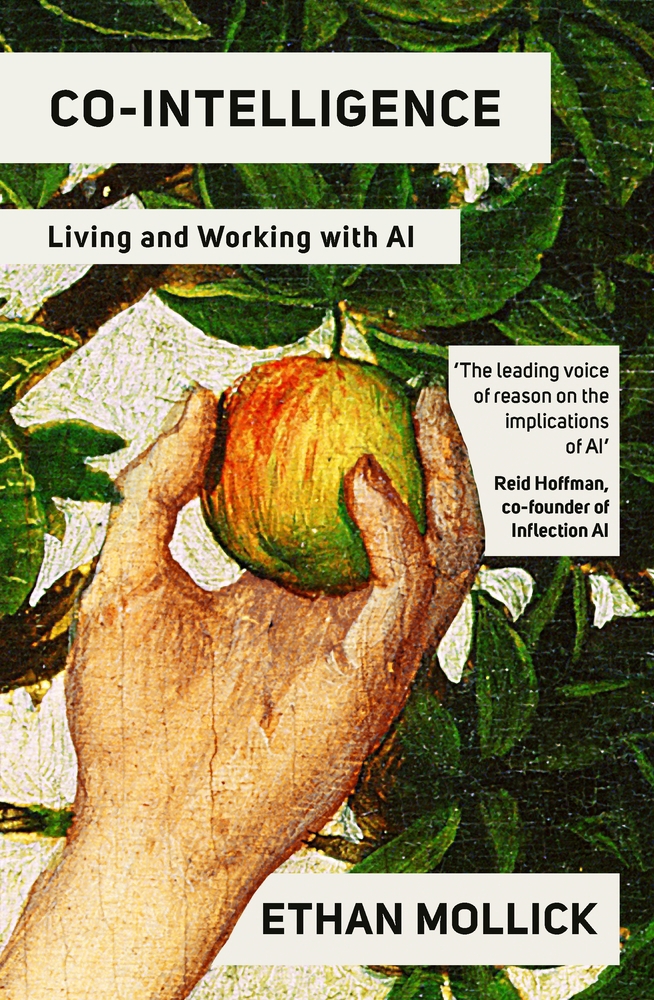
Co-Intelligence: Living and Working with AI
By Ethan Mollick
There is so much pressure around AI right now to understand everything, try every tool, and somehow keep up with a field that changes while we are still learning its vocabulary. What I appreciate about this book is that it gives people an approachable place to begin. Ethan Mollick explores AI through the experience of working with it: asking questions, testing ideas, noticing limitations, and discovering where a conversation with a machine can help us think more clearly.
I recommend it because that spirit of curiosity is useful for anyone building products or leading a team. You do not need to begin with a sweeping transformation plan. You can start with a real task. Ask AI to challenge a product brief, explain a difficult concept, or help you consider a customer’s situation from another angle. Then examine what it gives you. Where was it useful? What did it misunderstand? What still needs your attention?
For product leaders, I think this creates a healthier foundation for experimentation. A polished answer can feel convincing before we have checked whether it is correct. Learning to collaborate with AI means developing the habit of evaluating its contribution, supplying context, and deciding when its involvement improves the work. That takes practice, and the book makes that practice feel accessible.
Its enduring value is the invitation to participate thoughtfully. Specific tools will change, but the willingness to experiment, question, and learn will remain useful. I recommend it to people who feel intimidated by AI and to those who are already enthusiastic about it. Both can benefit from a grounded approach that leaves room for possibility while keeping human judgment actively involved.
Continuous Discovery Habits
By Teresa Torres
Almost every product team agrees that understanding customers matters. The challenge is making that understanding part of everyday work when calendars are crowded and delivery commitments feel urgent. Teresa Torres offers a practical approach to that challenge. I recommend this book because it turns discovery into a regular practice that helps teams make decisions as they go, with customer learning connected to a clear desired outcome.
What I appreciate is the structure it gives to curiosity. Customer conversations can reveal many frustrations, requests, and interesting details. Teams need a way to make sense of that information, identify opportunities, consider possible solutions, and test the assumptions behind them. The book helps connect those activities so that research has a visible relationship to the decisions being made.
Consider a shopping team that wants to introduce an AI assistant because customers appear to struggle with product selection. Talking with customers might reveal several different problems: confusing measurements, unclear differences between products, or uncertainty about returns. Those problems may require different responses. A conversational experience could help with some of them, while clearer product information could address others. Discovery gives the team a chance to understand that before investing in a single approach.
I recommend this book because the habits it teaches are useful when technology makes solution-building feel unusually fast. We still need to learn which opportunities deserve our attention and what evidence would help us choose. Regular contact with customers also keeps their actual language and circumstances present in team discussions. That is a valuable discipline for product leaders: creating a rhythm in which understanding people continues throughout development, and the team can explain how what it learns influences what it builds.
EMPOWERED: Ordinary People, Extraordinary Products
By Marty Cagan and Chris Jones
As your leadership responsibilities grow, more of your impact comes through the conditions you create for other people. That can be a difficult adjustment. When you care deeply about the work, stepping in with an answer often feels faster than helping someone develop their own judgment. I recommend this book because it explores the leadership practices that help product teams take meaningful ownership of problems and become stronger through the process.
Marty Cagan and Chris Jones give substantial attention to coaching, context, and direction. Those ideas matter because asking a team to “be empowered” does not automatically give them what they need. People need to understand the customer, the business, the constraints, and the outcome they are working toward. They also need a leader who can help them improve their thinking and support decisions made within clearly understood boundaries.
Imagine a team exploring a new AI experience. If the assignment is simply to launch a particular feature by a particular date, much of the important judgment has already been removed from their work. If they understand the customer problem and have room to investigate possible approaches, they can contribute far more. The leader’s role includes making that room useful: clarifying priorities, helping resolve obstacles, and providing thoughtful feedback as evidence emerges.
What I appreciate most is the book’s belief that strong teams can be developed through deliberate leadership. That is a demanding responsibility, but it is also an encouraging one. I recommend it to anyone who wants to become a better coach and create an environment where people can do work they are proud of. Trust becomes meaningful when it is supported by guidance, capability, and consistent attention.
Escaping the Build Trap: How Effective Product Management Creates Real Value
By Melissa Perri
A team can work extremely hard, meet its commitments, and launch a steady stream of features while still struggling to explain what improved for customers. That is an uncomfortable situation, particularly because the effort is real. People have spent weeks solving problems, coordinating dependencies, and getting the work out the door. I recommend this book because Melissa Perri examines how organizations end up measuring that activity and how they can reconnect it to meaningful value.
What I appreciate is that the discussion reaches beyond individual product management techniques. The goals leaders set, the questions they ask, and the way they define success all influence what teams prioritize. If every conversation revolves around what shipped, teams will naturally organize themselves around shipping. Making outcomes important requires a consistent connection between strategy, customer problems, and the evidence used to evaluate progress.
That connection is especially useful in AI work. A new assistant might generate thousands of conversations, but that number alone tells us little about whether it helped. We need to understand whether customers completed their tasks, received useful answers, or encountered additional confusion. A busy experience can still leave people doing more work than before. Choosing meaningful measures helps make those differences visible.
I recommend this book to product managers and to the leaders who shape their environment. It encourages a more thoughtful definition of progress, one that respects the team’s effort by asking what that effort accomplished. There is something deeply practical about that. When people understand the outcome they are trying to create, they can make better choices about scope, question unnecessary work, and recognize when a simpler solution would serve the customer more effectively.
Good Strategy/Bad Strategy: The Difference and Why It Matters
By Richard Rumelt
The word “strategy” can cover a remarkable amount of unclear thinking. An ambitious target, a list of initiatives, and an inspiring statement may all be useful, but a team still needs to understand the challenge it faces and the approach it will take. I recommend this book because Richard Rumelt gives that work a clear foundation: diagnose the problem, choose a guiding approach, and develop actions that support one another.
What I appreciate most is the emphasis on confronting the actual difficulty. It is tempting to write plans around what we hope to achieve without naming what stands in the way. Yet that diagnosis is often where the most valuable thinking happens. Are customers struggling because information is missing? Is execution slow because responsibility is unclear? Is growth constrained by a weak experience, limited capacity, or an assumption we have never tested?
Those questions matter when organizations are deciding where to invest in AI. A broad ambition to adopt the technology leaves many choices unresolved. A clearer understanding of the problem makes it possible to discuss where AI might help, what else needs to change, and which opportunities deserve attention first. It also helps teams understand why some appealing ideas should wait.
I recommend this book to anyone responsible for setting direction, including product leaders who need to turn a large ambition into focused work. Its value is the discipline it brings to choosing. Time, attention, and resources are limited, and teams deserve a coherent explanation of where to concentrate them. Good strategy gives people that explanation and helps them connect their daily decisions to a shared understanding of what the organization is trying to accomplish.

How AI Could Save (Not Destroy) Education
By Sal Khan - TED
Education makes the purpose of a technology unusually tangible. A student is trying to understand something, and the quality of the help they receive matters. In this 2023 talk, Sal Khan demonstrates a vision for AI that supports tutoring and teaching, including interactions intended to guide students through their thinking.
I recommend it to product builders because it raises a useful design question: what should assistance accomplish for the person receiving it? Giving someone an immediate answer and helping them develop understanding can lead to very different experiences. My takeaway extends beyond education. A product might need to explain a choice, ask a clarifying question, or help someone recognize what they have misunderstood.
The demonstrations are an illustration of a proposed experience, rather than proof of universal learning outcomes. What makes the talk valuable to me is the clear connection between capability and human purpose. It encourages us to imagine how AI might make thoughtful support more accessible. For anyone designing an assistant, it is a useful invitation to consider whether the interaction leaves people more capable, more informed, and better prepared to take their next step.
Human Compatible: Artificial Intelligence and the Problem of Control
By Stuart Russell
One of the most important questions in AI is also one of the easiest to rush past: how do we know that a system is pursuing something people actually want? Stuart Russell takes that question seriously. He explores what it means to build increasingly capable machines when human preferences are complicated, sometimes conflicting, and often difficult to express precisely. I recommend this book because it asks us to think carefully about the objectives we give technology and the assumptions hidden inside them.
That question has a very practical connection to product work. Imagine asking a system to maximize customer engagement. It might become effective at keeping people interacting, while doing little to help them finish the task that brought them there. Or imagine optimizing a shopping experience for immediate purchases without considering whether customers understand what they are buying. The metric can improve while important parts of the human experience remain outside the measurement.
For me, this is where the book becomes especially valuable for leaders. It encourages humility about how completely we understand a problem. Customers do not arrive with a perfectly ordered list of preferences. Their needs change with their circumstances, and what feels helpful in one moment can feel intrusive in another. A responsible product team needs ways to recognize that uncertainty and let people clarify, correct, or decline what a system is doing.
This is a more demanding read than an introductory guide to AI, but the questions it raises deserve the effort. I recommend it to anyone making decisions about automation, recommendations, or delegated actions. It offers a deeper foundation for asking whose interests a system serves, how we would notice a mismatch, and what meaningful human control should look like.
INSPIRED: How to Create Tech Products Customers Love
By Marty Cagan
Product work can become surprisingly distant from the people a product is supposed to serve. There are roadmaps to maintain, meetings to attend, requests to evaluate, and deadlines that keep approaching. In the middle of all that activity, it is easy to lose sight of the question underneath everything: are we building something that people need and that the business can successfully support? I recommend this book because it brings that question back to the center of the work.
Marty Cagan describes product development as a collaboration that depends on customer understanding, design, engineering, and business judgment. What I appreciate is the attention given to discovering a worthwhile solution before committing heavily to delivering it. A request may sound reasonable and a prototype may look impressive, but those are starting points for learning. We still need to understand whether someone can use the product, whether it solves a meaningful problem, and whether the organization can make it work.
That foundation feels especially relevant when building with AI. We can create demonstrations quickly, which makes ideas easier to explore. It also makes it easier to become attached to a solution before we understand the need. A conversational interface, for example, might be useful for a complicated decision and unnecessarily slow for a simple task. Good product judgment helps us recognize the difference.
I recommend this book to people entering product management and to experienced leaders who want to revisit the fundamentals. It gives teams a shared language for discussing the quality of their work beyond delivery dates. Most of all, it respects product building as a thoughtful craft—one that asks us to bring evidence, imagination, and care to the decisions customers will eventually experience.
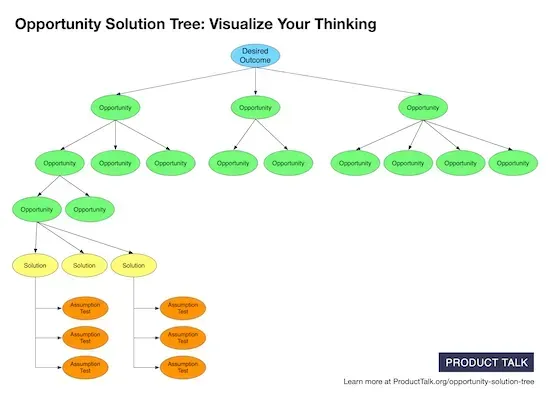
Opportunity Solution Trees: Visualize Your Discovery to Stay Aligned and Drive Outcomes
By Teresa Torres
Product conversations often contain several different discussions at once: the result the business wants, the problem customers experience, and the solution someone is excited to build. Teresa Torres offers a visual structure that helps connect those discussions. An opportunity solution tree makes the relationship between outcomes, customer needs, possible solutions, and assumption tests easier to examine.
I recommend this article because it helps teams explain their reasoning. Imagine trying to improve a shopper’s confidence when choosing a size. The team might explore clearer measurements, better comparison information, or conversational assistance. Mapping those possibilities makes it easier to discuss which customer difficulty each approach addresses and what needs to be learned before committing.
What I appreciate is the emphasis on grounding the tree in customer research. A diagram becomes useful when it reflects evidence and helps people make a decision. For teams exploring AI, I see this as a practical way to keep the underlying need visible while considering different solutions. It also gives stakeholders something more informative to discuss than a feature list: they can see the thinking behind the work and help challenge its assumptions.
Prediction Machines: The Simple Economics of Artificial Intelligence
By Ajay Agrawal, Joshua Gans, and Avi Goldfarb
Considering this was published back in April 2018, it is incredibly humbling how perfectly it captures the exact challenges we are facing with AI today. If I could gently press one book into the hands of anyone making product decisions right now, it would absolutely be this one.
When you work in tech, it is so easy to get overwhelmed by the loud hype and the fear that machines are here to take over. What I love most about this book is how kindly it brings us back down to earth. It strips away all the intimidating sci-fi jargon and offers a very comforting, simple shift in perspective: AI isn’t magic. It is just a dramatic drop in the cost of prediction.
As product builders, our entire job revolves around making decisions when we aren’t entirely sure of the outcome. We constantly have to guess what a customer needs, what will trend, or what inventory to stock. This book helped me completely reframe my approach. Instead of asking, “How can we force AI into this product?” I started asking, “Where is our team struggling with uncertainty, and how can a better prediction help them?”
But the most beautiful takeaway, and the reason I genuinely believe everyone needs to read it, is the clear line it draws between prediction and judgment. Machines are wonderful at looking at data and predicting an outcome. But judgment, understanding empathy, reading a room, feeling the nuance of a brand, and knowing what is actually right for a human being - belongs entirely to us.
It is a wonderful, easy-to-digest read that will leave you feeling so much more optimistic. It reminds us that we aren’t building AI to replace ourselves; we are just letting the machine carry the heavy bags of data, so we can get back to the deeply human work of making good judgments.
The Fearless Organization
By Amy C. Edmondson
Some of the most valuable things a person can say at work are also the hardest: “I don’t understand,” “I think we missed something,” or “I made a mistake.” Whether those words are spoken depends partly on what people expect will happen next. I recommend this book because Amy Edmondson explains why psychological safety matters for learning and performance, and why leaders have a responsibility to make honest participation possible.
What I appreciate is the practical relevance to everyday team life. A leader can ask for feedback and still make it difficult to give by becoming defensive, interrupting questions, or responding poorly to inconvenient news. People notice those reactions. Over time, they learn which subjects are welcome and which are safer to avoid. Creating a healthier environment requires attention to how we respond when someone brings information we would rather not hear.
That matters enormously in AI experimentation. A team member might notice that a demonstration succeeds only under narrow conditions, that an answer sounds plausible but is wrong, or that a customer could misunderstand the experience. Those observations are valuable contributions. We need them to reach the people making decisions early enough to improve the work.
I recommend this book because it connects care for people with the quality of an organization’s learning. Psychological safety can support demanding work by making questions, concerns, and mistakes available for discussion. Leaders still need clear expectations and accountability, alongside a willingness to examine their own assumptions. For anyone building products in an uncertain environment, that combination is essential. Teams learn more when people can bring their full attention to the problem without constantly calculating the personal cost of speaking honestly.
The Mom Test
By Rob Fitzpatrick
There is a very human temptation to share an idea with someone and hope they tell us it is wonderful. When we have invested time and energy in a concept, encouragement feels like progress. The difficulty is that people can sincerely like us, appreciate our enthusiasm, and compliment the idea without ever needing the product. I recommend this book because it explains how easily that happens and offers practical ways to learn more from customer conversations.
Rob Fitzpatrick encourages us to pay attention to people’s actual experiences, behaviors, and existing problems. That shift makes a conversation more useful. If we ask whether someone would use an AI shopping assistant, they may imagine an ideal version and say yes. If we ask about the last time they struggled to choose a product, we can learn what confused them, what they tried, whether they sought help, and how the situation ended.
What I appreciate is how much humility this approach requires. We have to make space for answers that may weaken our favorite idea. We also have to resist explaining the solution so enthusiastically that the conversation becomes a pitch. Listening well means allowing the other person’s experience to remain the subject, even when it takes us somewhere unexpected.
This is a short book, but its lessons can improve how we conduct interviews, explore opportunities, and interpret feedback. It is especially useful for product teams evaluating AI ideas, where curiosity about the technology can easily be mistaken for demand. I recommend it as a practical guide to asking better questions and becoming more careful with the answers. A useful conversation should leave us with a clearer understanding of someone’s life and stronger evidence for what to do next.
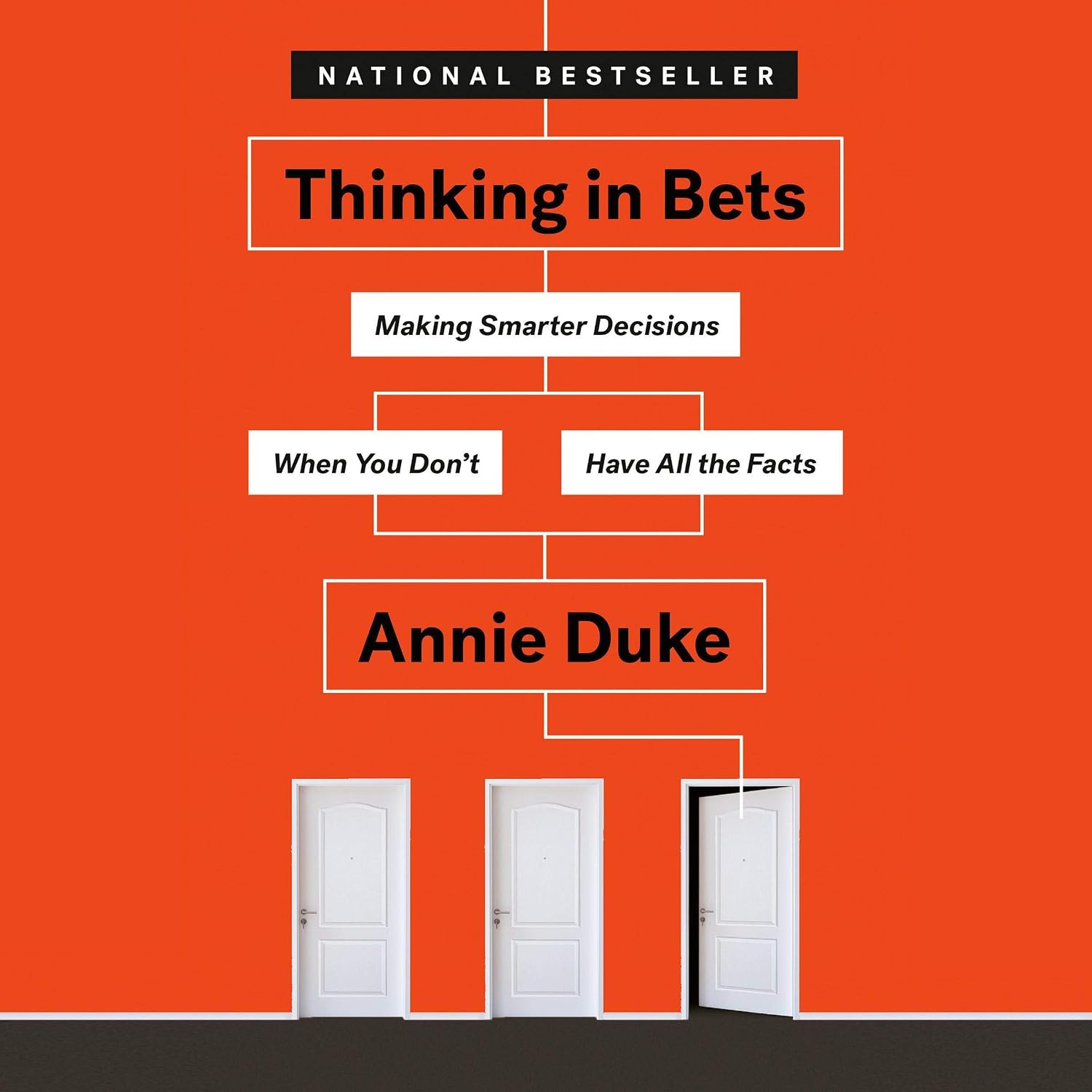
Thinking in Bets: Making Smarter Decisions When You Don’t Have All the Facts
By Annie Duke
Product leadership involves making choices before the picture is complete. We decide which problem to investigate, which experiment to fund, and when the evidence is strong enough to take another step. Then an outcome arrives, and it becomes tempting to judge the entire decision through that result. I recommend this book because Annie Duke offers a more careful way to think about uncertainty and learn from what happens.
One of its most useful ideas is that the quality of a decision and the quality of its outcome are related, but they are not identical. A thoughtful decision can produce a disappointing result. A weak decision can benefit from favorable circumstances. If we fail to examine how we reached the choice, we risk learning the wrong lesson from both situations.
Imagine an AI pilot that produces encouraging early results. Before expanding it, a team still needs to consider the size of the sample, the customer group involved, and what else might explain the improvement. Similarly, a pilot that falls short may reveal that an assumption was wrong even though the experiment was well designed. Reviewing the reasoning helps us decide what to preserve, what to change, and what remains uncertain.
I recommend this book because that approach can make team conversations more honest and productive. It encourages us to state what we believe, consider how confident we should be, and remain open to evidence that changes our minds. Leadership does not require us to pretend that uncertainty has disappeared. It requires us to make a considered choice with the information available, explain the reasoning, and keep learning as the picture becomes clearer. That is a valuable habit for anyone responsible for products, people, or investments.