May the AI Be with You: Navigating the Strategic Impact of AI Through Porter’s Five Forces
March 3, 2025
Introduction
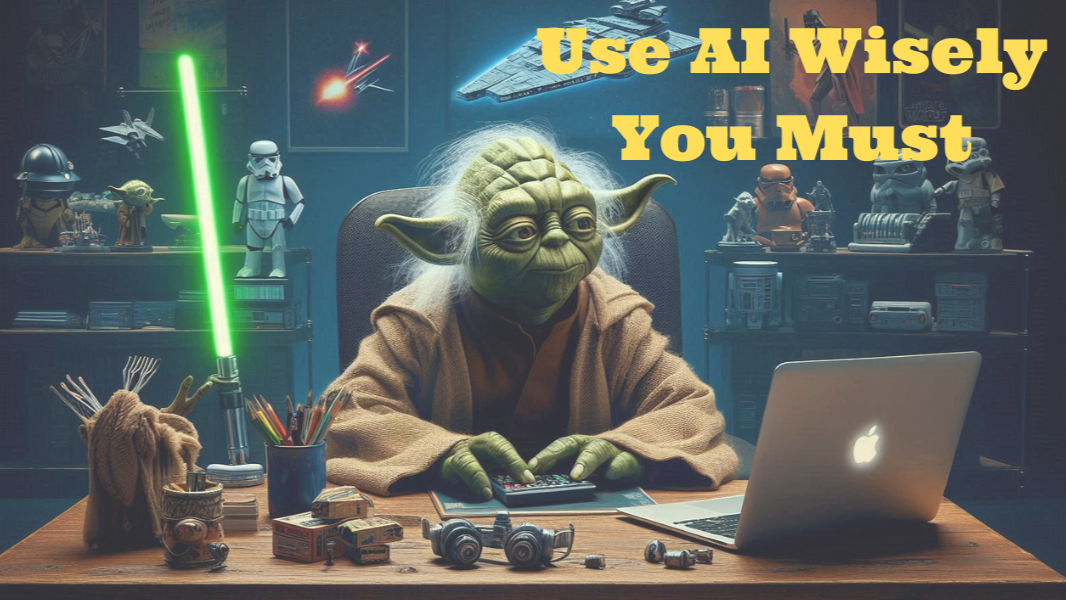
“Use AI wisely, you must!” - truly wise words from the one and only Yoda. As product leaders, we’ve all felt the pressure of balancing a million tasks at once: “fun” stakeholder demands, looming deadlines, and an ever-expanding to-do list. And then, throw AI into the mix, and suddenly, things get… let’s say, more interesting (and hectic).
Is AI just the latest buzzword, like the NFT craze, or does it have the potential to reshape our product strategies in ways we can’t yet imagine?
There’s so much chatter about new use cases, and honestly, it can be overwhelming. It’s like we can’t see the forest for the trees. So before I dive headfirst into the AI frenzy like a Jedi on a mission, I decided to pause and take a step back, looking at it through a clearer lens. Enter Michael Porter’s Five Forces - the “old school” framework to help us understand the competitive landscape and how AI might shift the playing field.
I apologize in advance for the Star Wars references. My wife had never seen any of the movies, so we’ve been on a bit of a movie marathon for the past week. Hence, the influence is very strong right now. So, here’s my attempt to use one of my all-time favorite authors and his famous work to guide us in exploring how AI fits into our product strategy - the right way.
May the data be with us!
Porter’s Five Forces- A Cheat Sheet
For those of you who might be saying, “Hey, I know Porter’s Five Forces, but could use a refresher” - no worries, I’ve got your back! This is the framework that helps us understand how industries work and where the power lies. It’s like a lightsaber for understanding the business dynamics at play. Here’s how each force shapes up when AI enters the scene:
- Competitive Rivalry: Is AI making your competitors faster, smarter, or just cooler? Are they passing you on the hyperloop, or are you ahead of the curve?
- Threat of New Entrants: Can AI act as a lightsaber-like barrier, protecting your product, or is it like opening a can of Tatooine sandworms, inviting everyone to try their hand?
- Bargaining Power of Suppliers: Can AI help you outsmart suppliers like the Rebel Alliance outsmarts the Empire?
- Bargaining Power of Buyers: Can AI make your product so irresistible that customers stick with you, or will they be lured away like Han Solo by the promise of a smoother ride?
- Threat of Substitutes: Is AI the Force that drives competitors to create alternatives to your product, or is it the same Force that helps you stay ahead of them?
Let’s break it down with a little more detail - and no, I won’t be using any lightsaber sound effects… unless you ask.
Note: I’ll use examples from my world - fulfillment, post-purchase, and order management, but this timeless framework applies to any product space, including yours.
How Product Leaders Can Use the Five Forces to Evaluate AI
1. Competitive Rivalry: Using AI to Gain an Edge
In the retail tech world, competitive rivalry is intense and sometimes insane. Let’s take, for example, OMS. It will not be far along before an AI-native Order Management System provides a significant advantage. Traditional OMS solutions rely on static rules and manual intervention, but AI-driven systems will offer dynamic, real-time decision-making.
Example: Imagine using AI to dynamically reroute orders based on real-time data like inventory levels, carrier capacity, traffic/road conditions, foot traffic in stores, DC capacity, etc. If a fulfillment center faces delays, road conditions worsen, or the store gets busier than usual - the AI-native OMS will autonomously switch to a different location, ensuring customer expectations are met without manual effort.
Tip: Regularly benchmark your product’s AI capabilities against competitors in the OMS and returns management space to identify opportunities and threats early. Can you clearly identify a use case that provides a competitive advantage?
2. Threat of New Entrants: Leveraging AI as a Barrier to Entry
AI can serve as either a competitive moat or a door opener, depending on how it is leveraged. For product leaders, the key question is whether the AI technology in question can create a unique value proposition that is difficult for new entrants to replicate. Rather than focusing solely on AI as a standalone innovation, its true power often lies in enhancing existing functionalities in ways that fundamentally transform the user experience or operational efficiency. In many cases, AI doesn’t need to reinvent the wheel - it can revolutionize it by making established processes smarter, more efficient, and more personalized.
Example: In the near future, AI-driven returns prevention management will proactively detect SLA risks and dynamically optimize order prioritization, secure faster carriers in real-time, and tailor product exchanges based on customer preferences and past purchases. This advanced predictive intelligence will not only enhance operational efficiency but also create a formidable competitive advantage. Given that these AI models rely on personalized data to uphold individualized SLAs, new entrants will face significant challenges in replicating this level of precision and adaptability.
Tip: Identify where AI could provide unique insights or efficiencies in post-purchase and returns management that would be challenging for new competitors to replicate.
3. Bargaining Power of Suppliers: Strengthening Supplier Relationships with AI
AI can play a pivotal role in reshaping supplier dynamics by improving demand forecasting, optimizing procurement strategies, and enhancing negotiation capabilities. By leveraging AI-driven insights, product leaders can proactively manage supplier relationships, reducing dependency risks and ensuring more favorable terms.
Example: A retailer leveraging an AI-powered inventory management system can accurately forecast inventory needs, reducing both overstock and stockouts. AI can also analyze real-time market trends, competitor pricing, and supplier performance data to uncover cost-saving opportunities. For B2B operations, an AI-driven system can intelligently recommend the optimal timing for bulk orders based on price fluctuations. Additionally, it can proactively identify supplier risks and even autonomously onboard and contract alternative suppliers - ensuring a more agile and resilient supply chain.
Tip: Be open-minded about combining AI-driven supplier analytics with emerging technologies like blockchain and smart contracts. Conduct ongoing research to monitor AI’s crossover with blockchain in automating supplier agreements, ensuring transparency, and reducing fraud. Leveraging AI for forecasting and blockchain for secure, self-executing contracts can enhance negotiation strategies and create a more resilient supply chain.
4. Bargaining Power of Buyers: Enhancing Customer Experience with AI
Hyper-personalization is set to become the new normal. In the near future, we won’t even call it “personalization” anymore - it will simply be the expected way of doing business. AI will empower product leaders to shape this new reality, delivering deeply tailored experiences that, in turn, reduce churn and strengthen customer loyalty.
But what does this mean for the bargaining power of buyers?
In short - brands will understand customers better than ever, reshaping the balance of power in commerce. This will increase brand stickiness and reduce price sensitivity. This means, that we MUST also drive demand for ethical AI, data transparency, and AI-powered consumer negotiation tools.
Example: From above - hyper-personalize shopping experiences. The system predicts not only a customer’s style preferences but also suggests outfits based on upcoming weather, recent purchases, and even their social calendar. Over time, the AI fine-tunes recommendations, making it - a personal stylist. Combining this with AI-driven personal pricing, the customer becomes deeply engaged with the brand, making it harder to switch to a competitor. In customer care, AI can analyze past interactions and predict the best support channels or even preemptively solve issues before customers reach out.
Tip: Explore the evolution of loyalty programs beyond discounts. AI-driven personalization can transform them into personal stylists or tailored shopping assistants. By integrating hyper-personalized recommendations, predictive styling, and exclusive early access based on individual preferences, brands can create deeper emotional connections. This shift makes loyalty a core part of the experience, not just a perk, increasing retention and making switching brands feel like losing a friend.
5. Threat of Substitutes: The AI Arms Race & Competitive Differentiation
AI is a double-edged sword. It lowers the barrier to entry for competitors while offering early adopters a chance to build a defensible advantage. The longer you wait, the more difficult it becomes to differentiate, as AI-driven capabilities quickly become industry standards. You don’t want to rush implementation, but doing nothing means risking obsolescence.
Example: Returns have long been considered a necessary evil - an unavoidable cost of doing business. Customers send items back, wait for approval, and eventually get a refund or exchange. It’s a static, transactional process, and frankly, a missed opportunity.
But what if returns could be a strategic differentiator?
We are at the inception of this transformation. Some retailers have already started tailoring return experiences based on loyalty tiers and purchase history, offering faster refunds or personalized exchanges to high-value customers. But this is just the beginning. As product leaders, now is the time to think beyond the obvious and explore how AI can reshape the returns experience in ways that don’t even exist yet.
Imagine this:
- Try Before You Return: Instead of shipping an item back immediately, AI-powered augmented reality (AR) or digital styling tools could help customers test out alternative options first. Found the perfect replacement? AI processes the exchange before the return even happens.
- Returns Meet the Resale Market: What if AI could match your return to another buyer before it even leaves your hands? The system scans demand in real-time and suggests selling directly to another customer at a discount—turning returns into a frictionless resale opportunity.
- Refunds, But Smarter: Returns don’t have to mean a full refund. AI could assess real-time demand and item desirability to offer partial refunds, trade-in credits, or even higher-value incentives for keeping the item.
- Subscription Models Get Smarter: For fashion rentals, electronics, and beauty brands, AI could predict return likelihood based on wear-and-tear, sentiment analysis, or usage tracking—preemptively swapping out items before they become a problem.
- Sustainable Returns by Default: Instead of reflexively sending every return back to a warehouse, AI could determine the most eco-friendly processing route based on item condition, location, and environmental impact. Want to reduce your carbon footprint? Customers choosing in-store drop-offs or lower-impact return methods could earn loyalty points or discounts as an incentive.
Tip: Regularly evaluate emerging AI technologies that could disrupt the post-purchase and returns management space. AI isn’t just making returns easier - it’s redefining them. The brands that move first will set new consumer expectations, turning returns into a loyalty driver instead of a loss. The question isn’t if this shift will happen—it’s who will own it first.
Building AI into Your Product Strategy
As I mentioned before, all of the examples above come from my area of expertise. However, I truly believe that this framework is universally applicable. The key is to master the fundamentals. Here’s my recommendation:
- Use Porter’s Five Forces as a framework to evaluate AI use cases - think of it as your map to the galaxy’s potential.
- Prioritize AI initiatives that align with your long-term product vision. Don’t just chase every shiny object (unless it’s the Millennium Falcon).
- Stay agile. AI is evolving fast - so should your roadmap. If you don’t evolve, you’ll end up like the Death Star - destroyed by a small but clever attack.
- Test, learn, and iterate - AI thrives on data. Keep feeding it and refining your approach, just like the Jedi constantly honing their skills.
- Involve cross-functional teams early to uncover AI opportunities and avoid pitfalls. Think of it as gathering your Rebel Alliance before embarking on an epic mission.
Final Thoughts
AI isn’t just a buzzword. it’s a strategic game-changer. Or is it?
By using Michael Porter’s Five Forces, you can take a structured, no-nonsense approach to understanding how AI could transform your product strategy - without the chaos of chasing trends.
But here’s the catch. Jumping into AI without a framework is like strapping a hyperdrive onto a broken ship. You’ll burn through fuel, but you won’t get anywhere. Many enterprise retailers fall into this trap, rushing into AI out of FOMO, only to struggle with real business impact.
Instead, think of AI as your trusted co-pilot, helping you:
Outmaneuver competitors
- Fortify against new entrants
- Strengthen supplier partnerships
- Deepen customer loyalty
- Stay ahead of substitutes
Or, in the wise words of Master Yoda: “Use AI wisely, you must.” Stay curious, humble, and always in Padawan mode - learning, experimenting, and adapting.
Now, it’s your turn: How do YOU see AI reshaping the future of competition? Drop your thoughts below! And remember - having a solid framework beats flying blind every time.
May the AI be with you!
\
Subscribe to Field Notes
Get my latest essays on Enterprise AI and Agentic Commerce delivered straight to your inbox.